Thursday, October 5, 2023

Unlocking the Path to Wellness: A Holistic Approach to a Fulfilling Life

 Wellness is more than just a phrase; it is a holistic approach to life that stresses an individual's complete well-being, which includes physical, mental, emotional, and social health. It extends beyond the absence of disease to prospering in different facets of life. In this blog article, we will discuss what wellness is, why it is important, how it improves our everyday lives, and practical methods to incorporate it into our hectic schedules.


What is Wellness?

A condition of complete mental, social, and physical health is defined as wellness. An active pursuit of tasks, options, and lifestyles that contribute to a state of holistic health is more than just the absence of sickness or infirmity.

Why is Wellness Important?

Wellness activities increase overall quality of life by encouraging excellent health, lowering stress, and increasing happiness and contentment. Increased Productivity: When you're in good physical and mental health, you're more productive and focused, which leads to higher performance in both your personal and professional life. Wellness exercises can help avoid the beginning of numerous diseases and health issues, freeing you from the physical, mental, and financial expenses of illness. Improved Mental Health: Making wellbeing a priority can help to minimize anxiety, sadness, and stress, fostering a positive perspective and improved coping skills for life's obstacles.

How Does Wellness Help in Our Daily Lives?

Boosts Energy: Regular physical activity and a well-balanced diet increase stamina and energy levels, allowing you to stay active throughout the day. Increases Resilience: Wellness practices increase mental and emotional resilience, allowing you to manage with stress and recover from failures. Emotional well-being and good communication skills promote healthy relationships, both individually and professionally. Improves Sleep Quality: Wellness habits frequently result in enhanced sleep quality, helping you wake up refreshed and ready to face the day.

How to Maintain Wellness in Our Daily Lives?

Regular Exercise: Include physical activities in your schedule such as walking, running, yoga, or dance to maintain your body active and fit.

Balanced Diet: Eat a range of healthful foods, such as fruits and vegetables, whole grains, and lean meats, while minimizing your intake of processed foods, sugar, and caffeine.

Mental Health Practices: Try mindfulness meditation, yoga, or other mind-calming activities. Seek treatment or counseling to address mental health issues as required.

Healthy Sleep Patterns: Aim for 7-9 hours of sleep every night by sticking to a regular sleep schedule and developing a relaxing bedtime ritual.

Social ties: Maintain ties with friends and family. To improve emotional well-being, participate in social activities and maintain a support network.

Limit Stress: To effectively manage stress levels, engage in stress-reducing activities such as deep breathing, meditation, or spending time in nature.

Schedule frequent health check-ups and tests to monitor your physical health and spot any possible problems early.

Checkout Few Wellness Product Here

Finally, health is the basis upon which a happy life is constructed. We build the path for a future full of energy, happiness, and resilience by investing in our physical, mental, and emotional health. Adopting a holistic approach to wellness not only improves our everyday lives, but also assures a better and brighter future. Begin your health journey now to open the doors to a more vibrant and balanced life.

Wednesday, October 4, 2023

2.4 GHz vs 5 GHz WiFi

 Wi-Fi networks employ two separate frequency bands: 2.4 GHz and 5 GHz. Here are some important distinctions:


Frequency:

2.4 GHz: Because this band runs at a lower frequency, it has a larger wavelength. It is more vulnerable to interference from common household equipment such as microwaves and cordless phones.

5 GHz: Because this band works at a higher frequency, it has a shorter wavelength. It is less susceptible to interference and congestion caused by other devices.

Speed:

Due to congestion and interference, 2.4 GHz often delivers slower maximum speeds than 5 GHz.

5 GHz: This processor offers higher speeds and is better suited for bandwidth-intensive operations such as streaming HD videos and online gaming.

Range:

2.4 GHz: Has a greater range and higher penetration through walls and obstructions, making it appropriate for bigger spaces.

5 GHz: This frequency has a lower range and may not penetrate walls as well, making it suited for smaller spaces or places closer to the router.

Interference:

2.4 GHz: More prone to interference from other devices operating in the same frequency band, potentially resulting in slowdowns in congested locations.

5 GHz: A less busy frequency spectrum that minimizes interference and congestion, particularly in metropolitan areas.

Compatibility:

2.4 GHz: Compatible with many older devices that may not support 5 GHz.

5 GHz: Because certain older devices may not support this frequency, compatibility may be a problem.

Grab Your Wifi Router

In conclusion, the decision between 2.4 GHz and 5 GHz is determined by your individual requirements. If range and compatibility with older devices are important, 2.4 GHz may be appropriate. If you want quicker speeds and less interference, 5 GHz is the preferable option, especially in a crowded Wi-Fi setting. Many current routers feature dual-band or tri-band operation, allowing you to use both frequency bands at the same time to get the best of both worlds.

Unleashing the Power of Python for Data Science

Python emerges as a formidable torchbearer in the broad field of data science, where ideas are buried behind mounds of data, illuminating the route to meaningful discovery. Python has become the preferred language for data scientists globally due to its simplicity, adaptability, and vast library set. Let's take a journey into the core of data analysis, looking at how Python has released unparalleled possibilities in data science.

1. The Python Advantage: Python's prominence in the data science field is well-deserved. Its simple syntax makes it suitable for novices, yet its versatility and resilience meet the needs of seasoned data scientists. This adaptability enables experts from a variety of disciplines to exploit the potential of data analysis, independent of programming experience.

2. Libraries as Data Science Building Blocks: Python's data science strength is largely due to its extensive library ecosystem. NumPy, Pandas, and Matplotlib are key libraries for data manipulation, analysis, and visualization. The array operations in NumPy, the data structures in Pandas, and the charting capabilities in Matplotlib are essential for every data scientist.

3. Data Wrangling Made Simple: Data seldom comes in the clear, organized manner required for demand analysis. Python's Pandas package excels at data manipulation. Pandas streamlines the difficulties of data preparation, allowing data scientists to focus on obtaining insights rather than cleaning dirty datasets, addressing missing values, or manipulating data.

4. Visualization: Data Storytelling: Data visualization is the art of translating raw statistics into captivating storytelling. Data scientists may use Python packages like Matplotlib, Seaborn, and Plotly to produce aesthetically appealing and useful plots and charts. These visualizations not only improve data interpretation but also successfully convey findings to a wide range of audiences.

5. Python's Crown Jewel: Machine Learning: Python's machine learning expertise is unrivaled. Scikit-Learn, TensorFlow, and PyTorch are libraries that provide sophisticated algorithms and tools for applications ranging from classification and regression to deep learning. Scikit-Learn's simplicity enables for quick prototyping, but TensorFlow and PyTorch adapt to the intricacies of neural networks.

6. Community and Collaboration: Python's thriving and welcoming community is a driving element behind the language's success in data science. Collaboration and knowledge exchange are made possible by a plethora of tutorials, forums, and open-source projects. Data scientists may use this collective understanding to overcome obstacles and keep up to speed on the newest advances in the industry.

7. Real-World Applications: Python's reach goes beyond data research to real-world applications. Python-driven data science solutions are altering businesses, from forecasting customer behaviour in e-commerce to improving supply chain operations. Its applications range from healthcare to banking to marketing and beyond, making it an important tool in today's data-driven society.

To summarize, Python's rise in data science is a tribute to its versatility and capability. Python has opened possibilities for both curious minds and seasoned experts by democratizing data analysis and machine learning. Python is a trusty friend as we continue to explore the enormous landscapes of data, helping us to unlock the secrets buried behind the numbers and charts, eventually defining a future where data-driven decisions direct us toward growth and innovation.

Sunday, August 20, 2023

Beginning with Python, Installing Python, and Running Python for the First Time

 Python is a simple and fascinating language to learn. To install Python and launch your first Python application, follow these steps:

Step 1: Install Python

Python may be downloaded here: Navigate to the Python official website at https://www.python.org/downloads/. Select the version that corresponds to the system you're using (Windows, macOS, or Linux).

Installer: Run the downloaded executable file on Windows. Open the downloaded package for macOS and follow the installation instructions. Python is frequently pre-installed on Linux computers, although you may wish to update it using your package manager.

Step 2: Verify Installation

Windows: Start the Command Prompt (search "cmd" in the Start menu) and run python --version or python3 --version (if Python 2 and Python 3 are both installed). You should be able to see the Python version that was installed.

Linux and macOS: Type python3 --version into the Terminal. This will display the Python version that is currently installed.

Step 3: Execution of Your First Python Program

Select a Text Editor: You may write Python code in any text editor. On Windows, use Notepad, on Mac, TextEdit, or any code editor such as Visual Studio Code, PyCharm, or Sublime Text.

Create Your Own Code: Open your preferred text editor and begin writing your first Python code. Let's say we want to print "Hello, World!" on the screen.

print("Hello, World!")

Make a copy of the file: Save your file as first_program.py with a.py suffix.

Launch the Terminal or Command Prompt: Go to the location where you've saved your Python file.

Execute Your Program: Type python first_program.py in the terminal (or python3 first_program.py on macOS and Linux). Enter your password.

You should see the output

Hello, World!


What is Python? Advantages of Python ? General Purpose of Python !

Python is a high-level, interpreted language for programming that is acclaimed for its readability and simplicity. Guido van Rossum created it, and it was initially released in 1991. Python is intended to be simple to understand and write, making it a good choice for both novice and expert programmers.


Advantages of Python:

Python's syntax prioritizes readability, which implies that its code is simple to understand and write. This results in a shorter development time and fewer errors.

Python has an extensive list of applications, including developing websites, data analysis, machine learning, scientific computing, automation, and others.

Python has a large standard library that includes modules and methods for numerous tasks, minimizing the need to build code from scratch.

Python is accessible on several platforms, including Windows, macOS, and various Linux variants, allowing developers to build code that runs on multiple operating systems.

Community and Support: Python has a huge and active development community. This implies that there are plenty of tools, libraries, frameworks, and documentation to help with issue resolution.

Python's integration capabilities allow it to easily interface with other programming languages such as C, C++, and Java. This makes it suited for developing complicated applications that may require components written in many languages.

Productivity: Python's simple syntax and extensive library allow developers to be more efficient by simplifying complicated jobs. Python is extensively used for web development, with frameworks such as Django and Flask assisting developers in creating dynamic and full of features websites. Data Science and Machine Learning (ML): Python provides a variety of libraries that aid data analysis and machine learning, such as NumPy, Pandas, and TensorFlow, making it a popular option among data scientists. Automation is the process of Because Python is capable of helping automate repetitive processes, it is useful in fields such as management of systems and programming.

General Purpose of Python

Python is a programming language that is suitable for all purposes, hence it is not restricted to a single application domain. It may be used to a variety of jobs and sectors, including :

Web development is the process of creating dynamic and interactive websites utilizing frameworks such as Django and Flask. Data Analysis: Data analysis and visualization using libraries such as Pandas, Matplotlib, and Seaborn. Scientific computing is the process of solving complicated mathematical problems and running simulations in scientific research. Machine Learning and Artificial Intelligence: Creating AI applications and training machine learning models. Automation is the process of automating processes in order to boost efficiency and eliminate manual labor. Game development is the process of creating simple to complicated games utilizing frameworks such as Pygame. Desktop programs: Developing cross-platform desktop programs with frameworks such as Tkinter, PyQt, and wxPython.

Networking: The development of network applications such as internet servers and communication tools. Scripting: The creation of scripts for system management, automation, and other purposes.


Monday, May 1, 2023

Best 5G mobile under 20 k in India

 It should come as no surprise that mobile phone manufacturers are vying to provide reasonably priced 5G devices given how swiftly 5G technology is becoming the standard. For those seeking for a 5G smartphone without breaking the bank, India has a number of excellent alternatives. The top 5G smartphones in India for under 20kare listed below.


Poco X3 Pro: 

The Poco X3 Pro is among the top 20k 5G smartphones available in India. It has a robust Snapdragon 860 CPU, a 6.67-inch FHD+ display, and a 48MP main camera. In addition, the smartphone includes a 5160mAh battery that enables 33W rapid charging, which makes it the perfect option for gamers and power users. Click Here To Buy This Product


Realme Narzo 30 Pro: 

Another well-liked 5G smartphone in India around 20K is Realme Narzo 30 Pro. It has a 48MP main sensor in its triple camera configuration, a 6.5-inch FHD+ display, a MediaTek Dimensity 800U CPU, and other features. A 5000mAh battery that supports 30W rapid charging is also included with the gadget. Click Here To Buy This Product


Xiaomi Mi 10i:

 The mid-range 5G smartphone from Xiaomi Mi 10i provides outstanding value for the money. It has a 6.67-inch FHD+ display, a powerful Snapdragon 750G CPU, and a main camera with a resolution of 108MP. A 4820mAh battery that enables 33W rapid charging is also included in the smartphone. Click Here To Buy This Product

Motorola G 5G:

 Equipped with a 6.7-inch FHD+ display, a Snapdragon 750G CPU, and a triple-camera system with a 48MP main sensor, the Motorola G 5G is a cost-effective 5G smartphone. A 5000mAh battery that supports 20W rapid charging is also included with the gadget. Click Here To Buy This Product


The Oppo A53s 5G is a top-notch 5G smartphone featuring a 6.52-inch HD+ display, a MediaTek Dimensity 700 processor, and a triple-camera system with a 13MP main sensor. A 5000mAh battery that supports 18W rapid charging is also included in the gadget.

Summary:

Finally, the 5G mobile phones under 20K in India mentioned above provide excellent value for money. They have strong CPUs, good cameras, and long-lasting batteries. These smartphones are likely to fulfil all of your demands, whether you're a gamer or a heavy user. So, go ahead and select the one that best meets your needs and budget.

Disclaimer. 

We cannot guarantee that the information on this page is 100% correct. Your little zone is not responsible for any errors. But we always try to provide you correct information. Kindly recheck on official site before purchase.


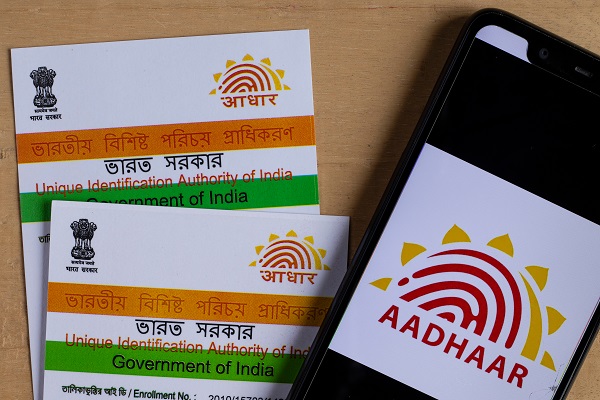
How to link pan card with Aadhaar card

 It is simple to link your PAN (Permanent Account Number) card to your Aadhaar card, and you may do it online or offline. To link your PAN card and Aadhaar card, follow these steps:


Online technique

Step 1: Go to https://www.incometaxindiaefiling.gov.in/ to access the Income Tax e-Filing website.

Step 2: On the main page, select the "Link Aadhaar" option.

Step 3: Enter the information on your Aadhaar card, including your PAN and name.

Fourth step: press the "Submit" button.

Step 5: The website will check your information against the database of the UIDAI (Unique Identification Authority of India). The connection procedure will be successful if the details line up.

Offline approach:


Step 1: Visit the NSDL website at https://www.tin-nsdl.com or any PAN service centre.
Step 2: Download or pick up the PAN-Aadhaar connecting form from the service centre.
Step 3: Complete the form by entering your PAN and Aadhaar information.
Step 4: Attach a copy of your PAN card and Aadhaar card that has been self-attested.
Step 5: Deliver the form to the nearby NSDL or PAN service centre.

You can call the Income Tax department's toll-free hotline or UIDAI's toll-free helpline for assistance if you run into any problems while connecting your PAN card with Aadhaar card.